Claude Fable 5.1: Cheaper Agentic Coding, Sharper Safeguards
Anthropic shipped Claude Fable 5.1 and its twin, Claude Mythos 5.1, on September 1, 2026. On paper it looks like another flagship bump. In practice the story is more useful than that: same input and output sticker prices as Fable 5, a steep cut on cache reads, clearer dual-track safeguards for cyber and life sciences, and early scientific work that goes beyond chat demos.
This post covers what the release actually is, why the pricing change matters for agentic workloads, how Fable and Mythos differ, and what teams should do this week if they already run Claude in production.
What shipped
Fable 5.1 and Mythos 5.1 share the same underlying weights. The split is about who can use which safeguards, not about two different brains.
- Claude Fable 5.1 — generally available. API id
claude-fable-5-1. Also on Amazon Bedrock, Google Cloud, and Microsoft Foundry. - Claude Mythos 5.1 — identical model with more permissive cyber and life-sciences safeguards, limited to vetted programs (Project Glasswing / Cyber Verification Program and Life Sciences Verification Program). Currently focused on U.S. organizations, with wider access coordinated with government partners.
Core specs for Fable 5.1 from Anthropic’s platform docs:
- 1M token context window
- Up to 128K output tokens (Messages API)
- $10 / million input tokens, $50 / million output tokens
- Cache reads: $0.25 / million tokens (75% cheaper than before)
- Adaptive thinking always on; default effort is
high - Knowledge / training cutoff: June 2026
- Text and images in → text out (no native image or video generation)
Anthropic’s guidance is still pragmatic: for most workloads, start with Claude Opus 5. Reach for Fable 5.1 when you need demanding reasoning, long-horizon agentic coding, or when Opus at higher effort still falls short on your evals.
Why this release matters
Three practical shifts stand out.
1. Agentic work gets cheaper without a model downgrade. Cache reads dominate the bill on long coding agents, multi-hour research loops, and anything that keeps a large repo or document set in context. Cutting that line item by 75% is why Anthropic estimates about 25% lower cost on typical Fable workloads and up to about 45% on highly agentic ones, versus Fable 5, at the same input/output rates.
2. Safeguards are being tuned for usefulness, not just refusal. Fable 5.1 can now be used to discover software vulnerabilities (defensive finding), while exploit development and several dual-use cyber tasks still get redirected. Anthropic says Claude Code users should see roughly 60% fewer cyber-safeguard interventions per session versus the prior Fable 5 safeguards. Biology false positives on elementary and medical questions were already cut sharply; research-grade life sciences still routes through Mythos access programs.
3. Enterprise privacy is moving toward customer-controlled monitoring. Enterprise Frontier Safeguards (EFS) stores activity data in the customer’s own cloud, with human review defaulting to the customer. Rollout starts later this fall. Until then, eligible customers can use Fable 5.1 with zero data retention. Anthropic restates that it does not train on enterprise data without explicit permission.
How it works at a useful level
Think of Fable 5.1 as a long-horizon work model with always-on adaptive thinking. You steer depth with an effort parameter rather than manually budgeting thinking tokens the old way. Defaults differ by product surface (High in Claude Code; Medium on Claude.ai / Cowork), which is worth remembering when you compare “the same model” across apps.
On benchmarks Anthropic published with the launch, Fable 5.1 leads or matches its peers on agentic coding and knowledge-work suites. Selected numbers from the announcement table:
- Terminal-Bench-Science 0.1: 52.6% (Fable 5: 24.7%; Opus 5: 29.0%)
- Terminal-Bench 4.0: 55.8% for Fable 5.1, 60.9% for Mythos 5.1 (gap mostly from cyber-safeguard interventions)
- CursorBench 3.2.0: 73.4%
- GDPval-AA v2: 1853
- Humanity’s Last Exam: 60.9% without tools, 65.0% with tools
- AutomationBench: 31.4% (Fable 5: 17.1%)
Those scores matter less than the qualitative pattern early partners describe: better root-cause debugging, steadier multi-hour unattended runs, cleaner progress updates, and fewer “it looked busy but didn’t finish the job” failures. Millennium’s note about Fable 5.1 tracing a one-in-a-million crash to a vendor library after years of human and model dead ends is the kind of story that matches how people actually use these systems: rare, high-cost problems where verification and persistence beat a flashy demo.
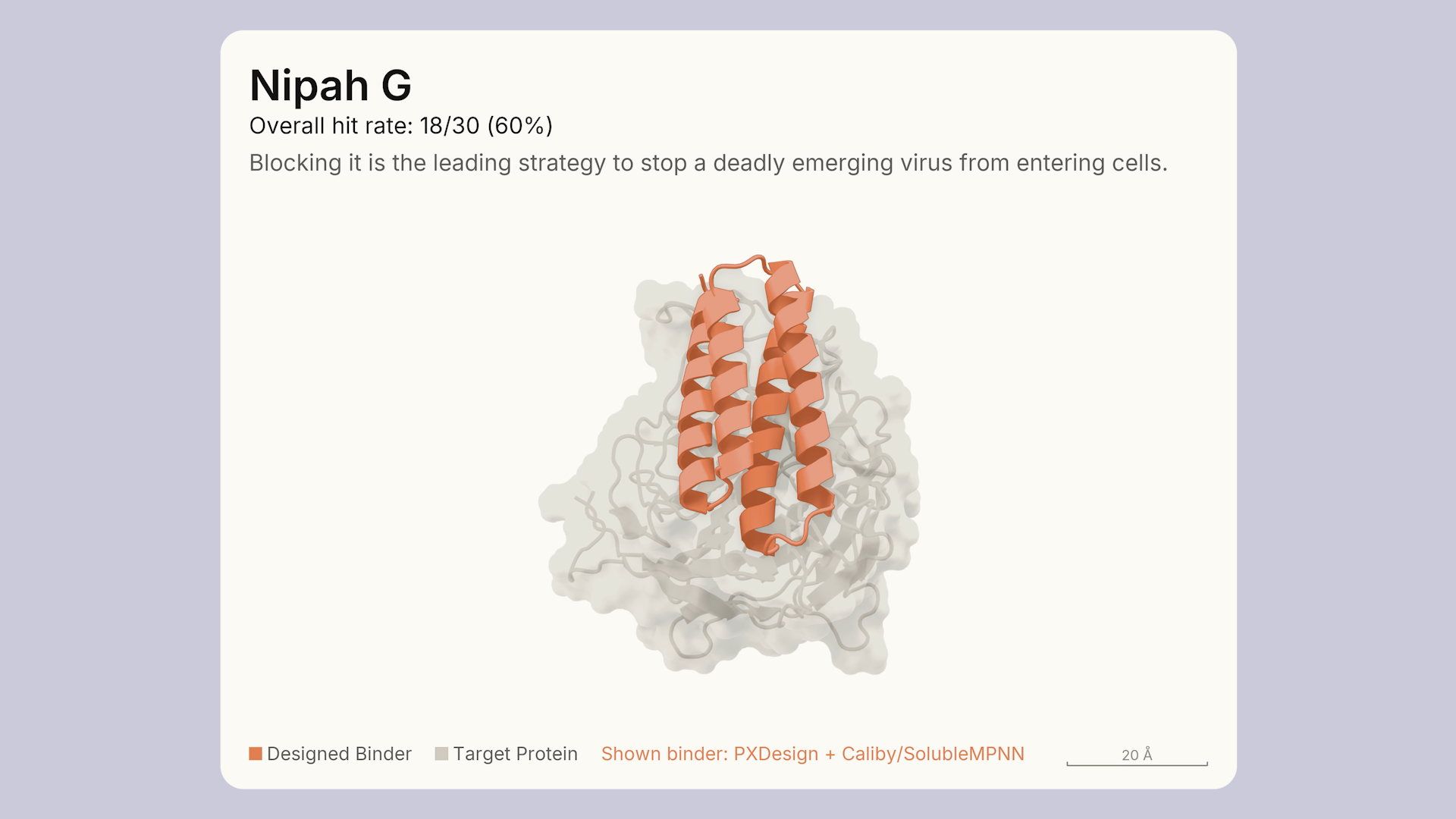
Scientifically, Anthropic highlighted three concrete threads tied to this model family: Mythos-assisted protein binder designs validated externally (high hit rates vs typical protein-design baselines on the targets they report), a higher-resolution Venus elevation map derived from Magellan radar (released under Creative Commons ahead of VERITAS / EnVision), and GPU kernel / caching optimizations that sped several open-source biology models by up to about 2.5× with matching outputs. Treat those as early evidence of research assistance under tool access, not as a claim that models replace experimental labs.
Fable vs Mythos, without the marketing fog
Same weights. Different policy envelope.
Use Fable 5.1 if you are a normal developer, company, or cloud customer. You get the new coding and knowledge-work performance, the cache-read pricing, and production safeguards that still block certain bio and cyber dual-use paths.
Use Mythos 5.1 only if you are in a trusted access program for defensive security or professional life-sciences R&D. Mythos is not an “unrestricted jailbreak model.” Other usage policies remain. Separately, Claude Security (codebase vuln scanning with human-reviewed patch suggestions) for Claude Enterprise is now powered by Mythos 5.1.
If your team was bouncing off false-positive cyber refusals on defensive work inside Claude Code, Fable 5.1’s more precise cyber safeguards are the first thing to retest. If you need deeper life-sciences research access, the Life Sciences Verification Program is the path, not a prompt trick.
Migration notes that can break you
If you already call Fable 5, Anthropic calls out three breaking behaviors for 5.1:
- Forced tool use returns an error.
- Earlier models cannot read this model’s thinking blocks.
- Editing earlier turns invalidates thinking blocks.
Additive pieces include lower cache-read price, content provenance / watermarking for EU AI Act transparency (invisible to end users; detection API in private preview for eligible orgs), and several betas (per-message effort, turn-scoped system messages, readable progress updates between tool calls).
Anti-distillation changes also matter for custom clients: new API accounts can no longer manually edit prior context in a multi-turn conversation while keeping Claude’s prior thinking transcript intact. Existing accounts are phased differently; check Anthropic’s Help Center if you built tooling that rewrote history mid-thread.
Practical takeaways
- Re-benchmark agentic coding and long research jobs on
claude-fable-5-1with your real repos and eval suites. Compare task success and cost per successful task, not just accuracy. Cache-heavy workflows should show the clearest savings. - Keep Opus 5 as the default daily driver unless your evals say otherwise. Anthropic’s own positioning still points most work there; Fable 5.1 is for the hard, long, tool-heavy jobs.
- Retest defensive security workflows that used to trip cyber classifiers. Expect fewer false positives, not an open door to exploit development.
- Enterprise buyers: ask your Anthropic / cloud account team about EFS timeline and interim zero-data-retention eligibility. If privacy was blocking Fable-class adoption, this is the material change.
- Update clients for thinking-block and tool-use rules before you flip production traffic. Silent mid-conversation history edits are a common footgun under the new anti-distillation rules.
- Life sciences and cyber defense orgs: apply to the relevant verification program if Mythos-class access is actually required. Do not plan product roadmaps on Mythos availability you do not have.
- Ignore hype about “AI scientists.” The useful bar is narrower: better long-running agents, cheaper cached context, and a few carefully reported research assists with external validation. Build process around verification loops, not press-release science.
Bottom line
Claude Fable 5.1 is less a flashy multimodal leap and more an operations release for serious coding and knowledge work: stronger long-horizon behavior, meaningfully cheaper cache reads, and safeguards that try to stay out of the way of legitimate defensive and medical questions while still gating dual-use depth behind Mythos programs. If you already pay for Fable-class agent loops, the pricing change alone is reason to migrate carefully this week. If you do not, run a side-by-side against Opus 5 on your hardest tasks before you change defaults.
Sources: Anthropic announcement, Claude Fable 5.1 docs, TechCrunch coverage, and Anthropic’s Fable/Mythos 5.1 system card.


Comments
Post a Comment